
LECTORAAT CHANGE MANAGEMENT – De Haagse Hogeschool
Cycling on the side walk | Teaching a critical thinking course: frames & observations halfway the semester in Japanonderzoek op het randje
After more than 20 years of experience teaching in the Netherlands, mostly at International Business at The Hague University of Applied Sciences, I am on a staff mobility pilot teaching and doing research for a semester at Yamagata University in Japan. Bringing my family along. This blog contains my reflections halfway down the semester. Read my first impressions here.
Halfway Yamagata University’s campus is a steep slope. First there is a flat area where I can speed up, avoiding students left and right. My challenge everyday is to get to the top of the slope easily, with a steady pace and no sweat. Overcoming this challenge is even sweeter when I see a student on a bike next to me struggling and falling behind as I swiftly cycle up that hill.
What can I say, the students by now are certainly half my age.
Teaching is Sweat
Teaching here has not necessarily gone smoothly and swiftly. At one moment during my Critical Thinking with Film class some students did not catch on at all. This is what happened:
I gave my students a choice to work in teams or individually. They had to find the argument to a position in the assigned documentary, and later on teaching this to the class. Without even talking to each other, they all started to work individually. Then I asked one student to teach about the position he had worked on. He did something entirely different namely not teaching but presenting a position incomprehensively. I tried to nudge him and tell him what to do instead, but he was not changing his track and kept on presenting, like he had not heard me.
I was becoming quite frustrated. Why did they not start working in teams? Why did he not hear what I was saying?
One of the students, who did actually catch on to what I was saying, came to me after the class and told me very politely that she thought the other students were not getting all of it and if she could help translate in Japanese from time to time…
Back to the drawing table
Before going to Japan I knew I had to test and try out what worked with this course in a completely different setting, but secretly hoped that I would get it right the first time.
But I had to change my tune, and adapt more to my current context. For the next lessons I put my English instructions through DeepL for Japanese translations. My instructions itself became more directive: ‘you, you and you, in this group.’ My ‘catching on’ student became my aid in explaining and checking instructions in Japanese.
But there was more I had to do – by going back to the drawing table, stripping the lessons down, and slowly build up again.
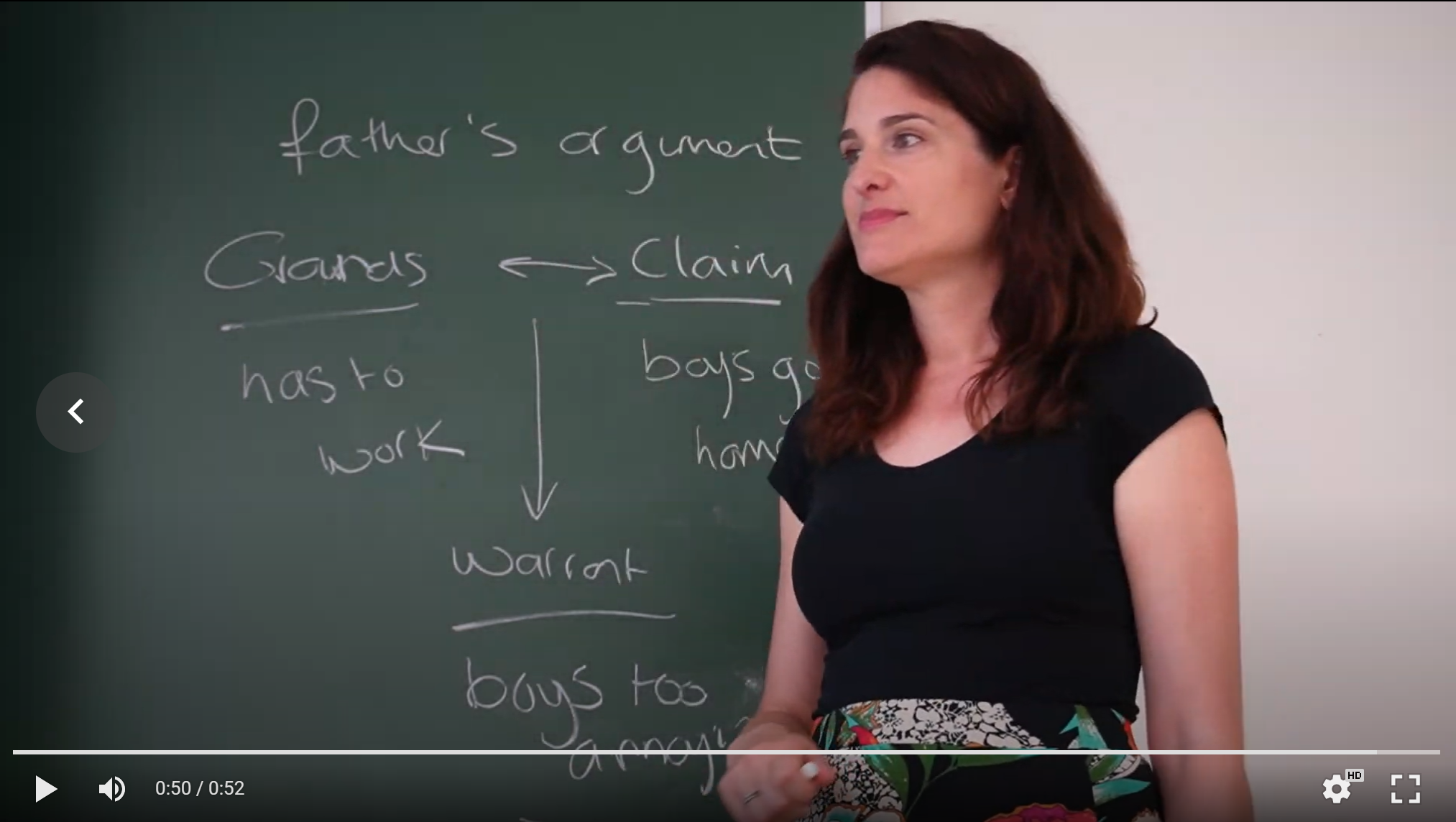
Instead of using the complete Toulmin model of argumentation, which I normally use in my international class in The Netherlands, I focused on the 3 primary components being:
Then I had to carefully train the students with how they could apply this to decision making portrayed in film clips. And how to teach this to the class, with the help of my Japanese student assistant, and by putting them into groups.
The big test on whether I succeeded in this was halfway the semester when I asked my students to present their own selected film clips applying Toulmin’s claim, grounds and warrant.
Teaching is Sweet
In my class I had one Japanese student, Yushi, who hardly said a word all semester, always looking down at his desk when I was eliciting answers from the class. In practicing clips presentations he let his teammate do the talking. I knew he could write in English, but when it came to talking he was struggling to find the words.
But it was his turn now to teach us critical thinking using film clips. I had already allowed him to be fourth of the group of 5 before going up to the front of the class. Told him the week before that I was really looking forward to hearing him speak as I knew he could. He smiled at me a little.
And speak he did. Well, to be honest he was still mostly staring and reading from notes, but he stood in front of the class and introduced us to Green Book (2018). This film is about an African American pianist Don Shirley who is chauffeured by an Italian American bouncer Frank “Tony Lip” Vallelonga in the 1962 Deep South.
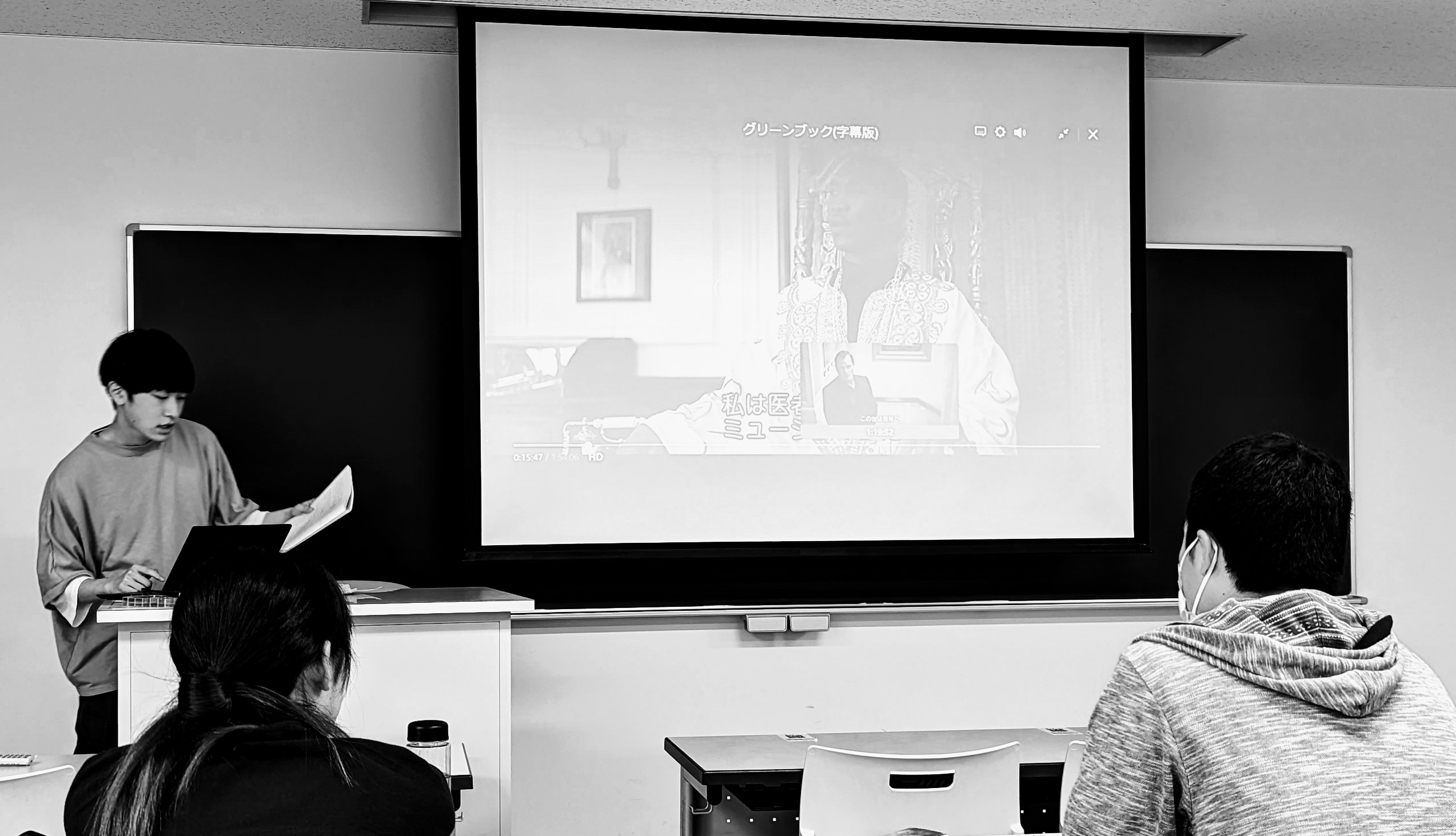
The first scene Yushi showed was Tony Lip throwing two glasses in the bin that his wife had offered to two African American plumbers who had just fixed his sink. Yushi explained that there are no valid grounds (evidence) for this behavior, no grounds for this discrimination.
He then showed the next scene, where the main characters are in the car and Tony Lip shares fried chicken with Don Shirley, eating with bare hands – something that the latter has never had before. They throw the bones out of the window, but when Tony also throws out the paper cup, Don makes him pick it up.
This very nicely juxtaposed with the first scene. The third and last scene even more so when Tony and Don hug and he invites them to the Christmas meal. Yoshi linked this scene to the critical definition that I have given the class:
Critical thinking means that you first reflect before taking a position or decision on how to act.
Yushi mumbled a few things about this that I could not precisely hear, but could understand. That first reflecting is what should have happened before throwing the glasses in the bin, but Tony got there in the end and reversed his decision on how to act by hugging Don.
Was it like I planned it / wanted it to go? No. Was I impressed? Yes. He could communicate using film that he understood the course: he selected three scenes carefully, connected them and applied the critical thinking model of argumentation and definition. This shy young Japanese guy moved me with applying critical thinking to a difficult subject like racism, something I had assumed was not much on his mind in this quite homogenous city of Yamagata (but what do I know?)
I was reminded of one of the workshops I followed years ago where Robbert Braak stated that film moves head, hearts and hands. When teaching critical thinking it is good to be able to separate the head, heart and hands, but at the same time also realizing that the three are always connected. Yoshi could connect both argumentation and his own perspective and heart with these film clips.
My other students did great things as well with their respective teachings. Let me know if you would like to hear their scenes and takes on it. Film clips are a great tool for teaching critical thinking in many different contexts.
It’s good riding steep hills with students – both the sweat and the sweetness.
More about how to teach Toulmin argumentation in film clips? See the Film Activity Plan on FlickThink: Toulmin & Decisions on FlickThink.org

 LECTORAAT CHANGE MANAGEMENT - De Haagse Hogeschool